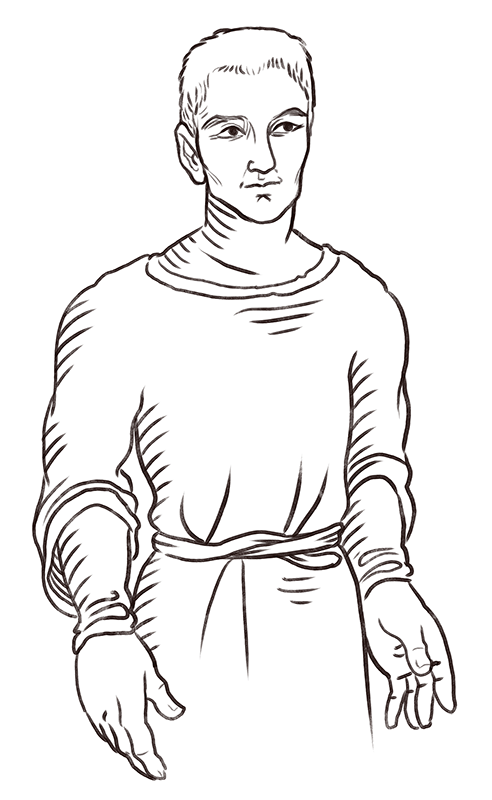
Transcript
The work goes round with the year. Lambing starts in February — you’re in the barn most nights then, checking the ewes, pulling lambs when they need it. Shearing’s in June. Haymaking and harvest through summer. Come autumn we slaughter what we can’t feed through winter, salt the meat down. Winter’s the lean time — mending tools, keeping the animals alive, waiting for it all to start again.
There’s maybe four or five of us permanent hands here. We’re the ones who stay year-round, know the sheep, know the land. Then there’s the village folk doing their manor work — two, three days a week on the Templar’s fields. Some work hard, some slack. I work with who turns up. Wulfric sorts it if they slack. I chose to come here from near Pomfret. Family didn’t need all its sons. Stayed on here – it suits me.
The sheep, you get to know them. There’s a ewe with a notch in her left ear — always lambs early, always twins. The dog knows her too. He’s steadier than most people. Works better with him than with half the lads they send me.
Wulfric runs the estate, keeps it all moving. He came up from the work – same as me – but his gift was numbers, planning, knowing which village owes what and when. I haven’t got that. I know sheep and soil and what needs doing next.
I haven’t been further than Kirkstall. Saw the new street at Leeds once, a lot of people in one place. I didn’t stay long. But the Eyr runs past both of them before it reaches here.
Saw the Templar’s man on a horse earlier, heading off somewhere. Faster than walking – and easier too.
 Jon Eland