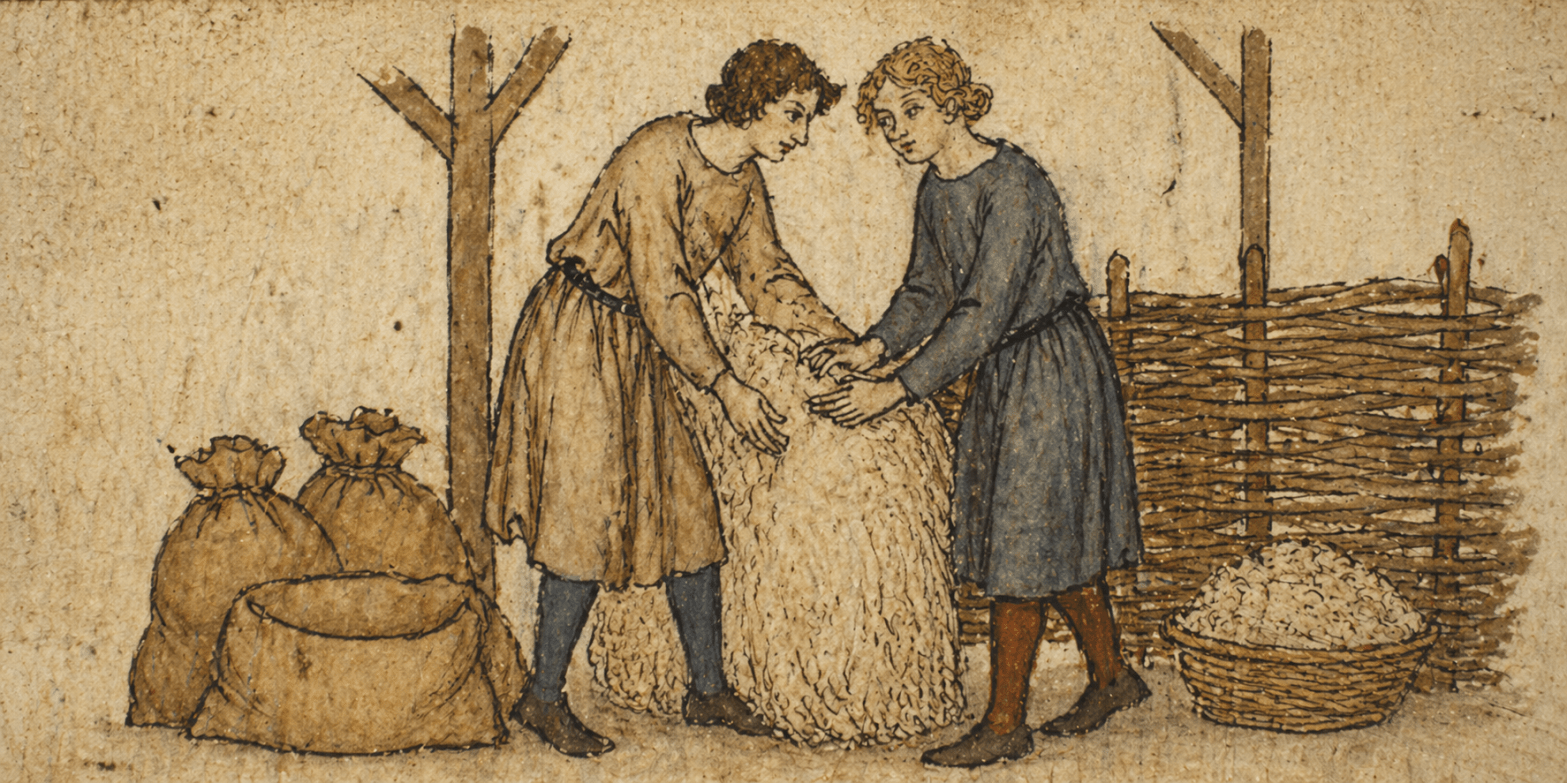
Historical fiction derived from my research.
The research I’ve undertaken into Temple Newsam’s medieval preceptory raised questions the (quite limited) historical record couldn’t answer. The Templars were accused at their suppression of behaviours the Church condemned — charges historians largely dismiss as politically motivated. But the accusations pointed to something real: all-male communities living under religious discipline, likely sharing beds for warmth, navigating intimacy within strict hierarchies.
What happened when someone in that world didn’t fit the heteronormative frame assumed as universal? What happened when two such people found each other?
I turned to fiction to explore that gap — not as speculation dressed up as history, but as a disciplined imaginative experiment. Working with AI as a collaborative tool, I set hard constraints: period-appropriate language structure and sentiment, accurate material culture (buildings, food, clothing, labour), medieval norms around male physical intimacy, and the institutional realities of Templar settlement life. The Templar Rule applied to vowed brothers, not lay workers. The threat came from individuals, not the system itself. Activities were the flaw – not demeanour. The two-sleeps pattern created windows for privacy. Within those rules, I let the story develop.
The result became Alwin of Neusum. A first book follows a young farmhand and a slightly older member of the preceptory as they navigate attraction in a world that had no vocabulary for what they’re feeling. Against the backdrop of a priest-brother losing his way and threats from the nearby woods, the novel explores how they farmed, how they travelled, what it meant for someone of Alwin’s status to speak to an abbot — alongside what happens when desire surfaces when there’s no framework to name it.
A second book is also in development: a meditation on different forms of love and the necessity of community, structured as snapshots across years rather than a single crisis.
This fiction sits alongside my research work on the Neusum Creative Trail and the historical blog — a different lens on the same material. It’s what the archive made possible when I stopped asking only what I could prove and started asking what might have been true.
Related Articles
Questions and comments on this are welcomed. Follow this website or my substack for information on new content.
Terms
- Preceptory — A Templar estate serving as both working farm and administrative center.
- Templar Rule — The religious code governing vowed Templar brothers. It did not apply to lay workers.
- Lay workers — Non-vowed laborers employed on the preceptory, not bound by the Templar Rule.
- Vowed brothers (or knight-brothers) — Men who had taken religious vows to the Templar Order and lived under the Templar Rule.
- Two-sleeps pattern — the medieval practice of divided night sleep with a period of wakefulness between, creating pockets of private time.
- Neusum – 12th century spelling of ‘Newsam’ – the Knight’s Templar commercial farm near Leeds.

