The following tale is grounded in fact – but is a work of fiction; of macabre happenings when escorting pilgrims near Nazareth.
An unexpected storm broke over the travellers well short of their stop for the night, hard enough that Sir Matthieu, who knew this road well and had meant to reach further, judged it wiser to shelter than press on blind. They found a house standing empty at the edge of Haddlesey and took what cover it gave them. Martin got a fire going despite the wet, and Alwin saw to Sir Matthieu’s mare.
The group were Sir Matthieu – the new preceptor at Newsam – bound for Temple Hirst to see the area commander. Martin accompanied him as acting reeve with Alwin on his first duty as squire.
It was Martin who asked the new Preceptor for a story, the rain still landing hard on the roof.
Sir Matthieu sat quiet and considered, looking at the fire as though it were a door he was deciding whether to open.
“When this tale happened the weather differed greatly, but we were much as we are tonight,” he said. “Uncertain of the ground beneath us, though none of us would say so aloud — the bed we kept that night was none of our choosing. Fifteen souls all told — myself and Robert, another brother of the Temple, our squires, five pilgrims bound south, five more to serve them, and the guide who was meant to know the road better than any of us.
“The squire in my care was named Elias. Outremer-born, raised to our needs from a boy young enough not to remember any other. Though not of Frankish blood, he was as true a squire as I have had before or since. At least until that night.
“We had a plan to reach a village before dark and did not. Past midday the sky began to thin, as though something were draining the daylight and placing a coin in front of the sun, at an hour that it should have been whole. I have since learned what such a sign is and how it comes about. That day none of us had a word for it, and I will tell you plainly I felt the fear of it as much as any man there — Robert too, though he would likely deny it if you asked him outright. The pilgrims prayed, loudly and without shame, and I did not think less of them for it. Our guide would not move until it had passed, and would not be argued out of his fear no matter how Robert pressed him, and by the time it had passed, the light was already turning, and we were behind ourselves in a country none of us knew.
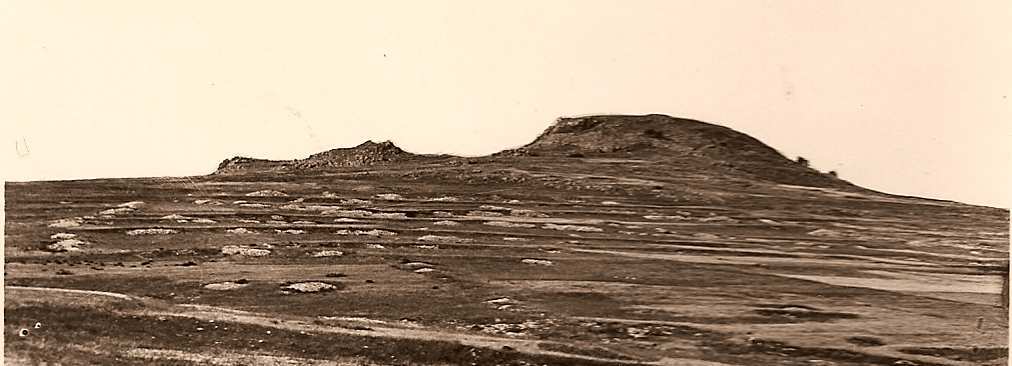
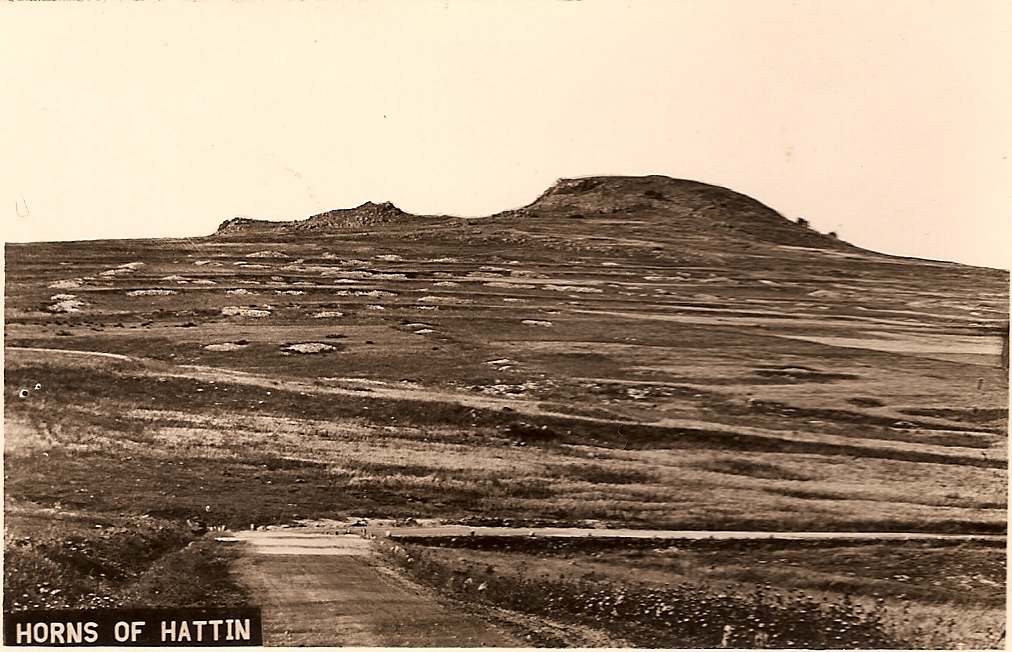
“The shape of that country is one I remember better than most places I chose to go to, or know well. Two hills, side by side, rising off the flat like a beast’s horns set into the earth. The ground beneath us was cracked, though it was not the season for that, and nothing grew there taller than a man’s ankle. No birds. I noticed that before I understood why it troubled me — there ought to have been birds, at that hour, and there were none. We made our camp on a rise a little off from the saddle between the two hills, glad enough to stop, none of us liking the place but none chose to share it aloud. There was no water where the maps had promised it, and I remember thinking that a strange thing for a hillside to lack, and thinking no further on it than that.
“A guard was set and Elias took the last watch. We do this regardless, though that night we made doubly sure each man could still open his eyes when called. My own sleep that night was the deepest I have ever slept on the road, before or after — a thing done to me, I have come to think, rather than a thing of nature. Robert, the other brother, told me after that he slept the same — dropped, he said, like a stone into water, with no dreaming and no waking, no more than our other squire did, even when Elias tried to shake the three of us awake.
“That was what Elias told me of that himself, once, in the only telling he ever gave, some days after, in a voice I did not know as his. He said the moon that night was so bright it seemed almost day, and it was by that light he watched the others rise — quiet and unhurried, one and then another. Three of the pilgrims and four of the servants, each standing and walking as if under another’s command, headed toward the waste plain at our rear, each as a man walks toward a voice calling his name from a room he knows well. He came to wake us — shook me, then Robert, then our other squire. None of us stirred, he said, no more than the dead stir, and I believe him, for I have no remembrance of that night at all until first light.
“My squire did not know what to do. A squire does not leave his knights, and a squire does not let protected Christian souls walk into the desert alone at night either, and, with none of us responsive, he had no one to ask which duty came first. He chose the safety of those we were there to protect and went after them. He stopped at a rock on the edge of the flat ground and from there he watched – unable to stop it happening.
“Those of us at camp woke at first light to find eight of us missing and no mark on the ground worth following. As we searched we found Elias standing dark against the grey light, upon the rock where he had held the whole night through, facing those two hills. Robert said, once he had his voice fully back, that he would rather have faced the sword twice over in Egypt than a night like that one again, and I did not disagree with him. Around Elias there were no signs of the others. No blood, no bodies, nothing a man could bury or grieve over properly, which is its own kind of grief, the kind with no bottom to it.
“You need to know what was in his face when I reached him, because I have never been able to stop seeing it. It was fear — plain fear, the kind any man might wear, the kind I would have understood and known how to comfort. And then, while I held him by the shoulders and said his name, I watched it leave him quickly; the way a lamp gutters once the oil is spent, though it had burned steadily enough a moment before. What was left in his eyes after put me in mind, God forgive me for saying it, of what I imagine we would have found in the eyes of whatever had been walking that hillside the night before, had we been fool enough to look into them.
“Words fell out of Elias at much speed, in a mixture of Frankish and unknown languages of Outremer. It wasn’t all of a piece — but I got a sense of it. How he saw the dead – there, but not there, fighting a battle long since over. That the seven wandered into this battle – without a sense of danger; each struck down violently as they stood. He said the blood did not simply fall from them — it gushed, as though the air itself were pulling it from their bodies — but where it struck the soil, it seeped away at once, as if it were becoming part of the desert itself. But then – as the sun returned – they were all drawn back into the sands, as if they themselves were made of it – the dead who had risen and our fellow travellers taken with them, alike.
“Those were the last words he spoke that day or any day thereafter. The remaining pilgrims lost all interest in our tour of the Holy Land – so we headed to Acre. Our guide fared little better than my squire, though he found his tongue again sooner. He had been badly shaken by the sign in the sky before ever we made camp, and what came after broke what nerve he had left in him. Taking leave of us the moment Acre’s walls came in sight – not able to be persuaded to stay the last mile in our company. He never asked to guide brothers of the Temple again, so far as I have heard, for which we can lay no blame.
“By the time we arrived at our house in Acre, Elias could not be trusted near open ground, would not eat unless watched. Once a firm lead he had twice near led his horse into open water or ditches without seeming to know they were there. A squire in that state is not a squire any longer whatever else he may be, and he had become, I will say it plainly, a danger to the rest of us on the road, which is not a thing I say lightly of a boy who I once held in such trust. I left him at Acre, in the Infirmarer’s care, and judged a boy who had served us so should be owed no less.
“It was later that evening, back among the brothers, that I described the shape of that country to an older knight who had been in the Holy Land longer than I. The two hills, the cracked ground, the absence of water where water should have been. He went very still, and told me the name of the place, and told me what had happened there some years before I ever set foot in that country, and he gave me a word for it too — sanguisuga, a Latin word he said many use in hushed tones for such things, near enough to ‘leech’ or ‘bloodsucker.’ I had not known the place’s name nor that word, before that evening – but I was aware of the shame we carried.
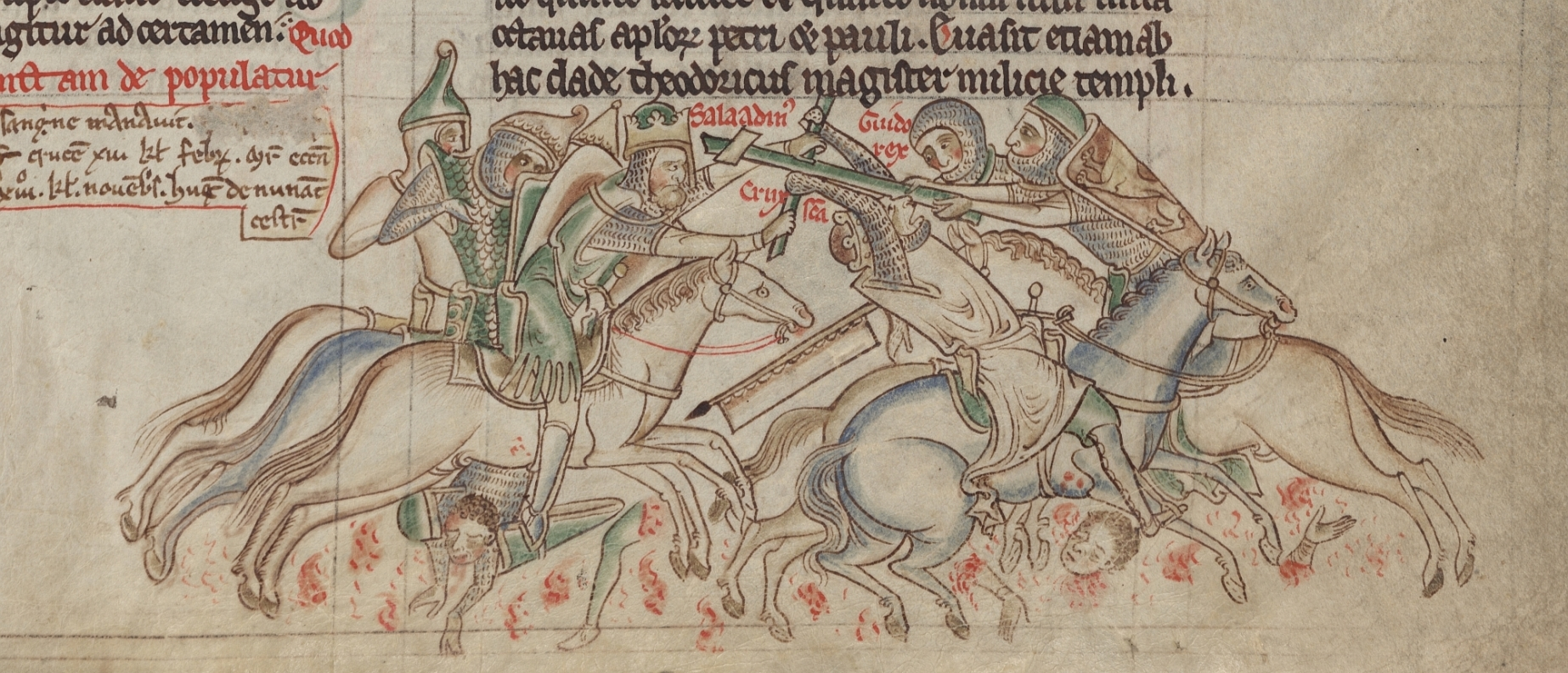
“He told me the place was Hattin — the hillside where the army of Jerusalem broke twenty years past, driven half-mad by thirst before the fighting had properly begun. Those who survived it said the water was the true enemy that day, not the sword. He told me our brothers taken living, near two hundred of them, were given the choice of the cross or the sword. It’s said all chose the sword rather than unmake what they had sworn, and were to a man beheaded in the same day on the order of Saladin. No graves were dug that any account speaks of.
“I have wondered since – God forgive the thought – whether that ground ever stopped being thirsty. Was it only that night or does it drink still – waiting for what it needs to be put in front of it. I have wondered too why it was seven who wandered and did not return, and not more, and not fewer. Does that number carry some weight I do not have the learning to judge, or if those seven simply carried something in them, some manner of open door, that the eighth and us others did not.
“I do not speak of this to other brothers. I do not care to let it near my thoughts more than a man of sound faith ought to allow. But I have never been able to make myself believe otherwise, not truly, not in the dark — and I would rather say that to two boys by a fire than pretend to a certainty I do not have.”
The preceptor stopped there.
A man finishing a tale oft trails with some shape to it; Matthieu simply stopped, mid-breath, as though the telling had run out from under him.
Some time passed with just the sound of the wind and rain in our ears before Martin asked in a low, trepid voice, whether he believed Elias had truly seen what was spoken.
“Eight people went away from the camp and into the dark and only one came out of it,” Sir Matthieu said, “and I believe I looked into the one face among us that stayed, and did not know entirely what I was looking at – but I believe the words I heard were his truth. Whether that is a mercy or a cruelty I have never decided. I am not sure it is for me to decide.”
Neither lad moved or fed the fire for some time after that.
Notes for readers
A few terms and details, for anyone who wants them — for the curious.
Preceptor / Commander — the head of a Templar house (a preceptory) and its estates. “The Commander” here refers to one who oversaw a region – the senior figure Sir Matthieu is travelling to see at Temple Hirst, the administrative headquarters for the Templars in Yorkshire
Outremer — translates literally as “overseas” in Old French. It was used at the time for the Crusader states in the Levant.
The eclipse — the sky-darkening Sir Matthieu describes links to an annular solar eclipse on 28 February 1207, visible across this region.
Hattin — the Battle of Hattin, 4 July 1187, was the catastrophic defeat of the Crusader army by Saladin, fought on a hillside near the Sea of Galilee. Around 200 captured Templar and Hospitaller knights were executed afterward rather than ransomed. It’s thought to be the worst day in the Order’s history, and the ground the story is set on.
Infirmarer — the Templar (Latin) Rule specifically names an officer responsible for the care of sick or injured brothers. Leaving Elias in his care, rather than simply abandoning him, is an obligation the Templar Order would hold very important.
Sanguisuga — Latin for “leech” or “bloodsucker.” As used by a 12th-century English chronicler, William of Newburgh, to describe an animated corpse in one of his own accounts of the walking dead. Revenant is a word we might expect here but research suggests this didn’t come into this use until the early 1800s.
Image credits:
Top: Photo postcard of the Horns of Hattin (1925) – Fadil Saba, Nazareth (Public Domain)
Lower, drawing: Cambridge, Corpus Christi College, MS 026: Matthew Paris OSB, Chronica maiora I, fol. 140r (Public Domain)


