
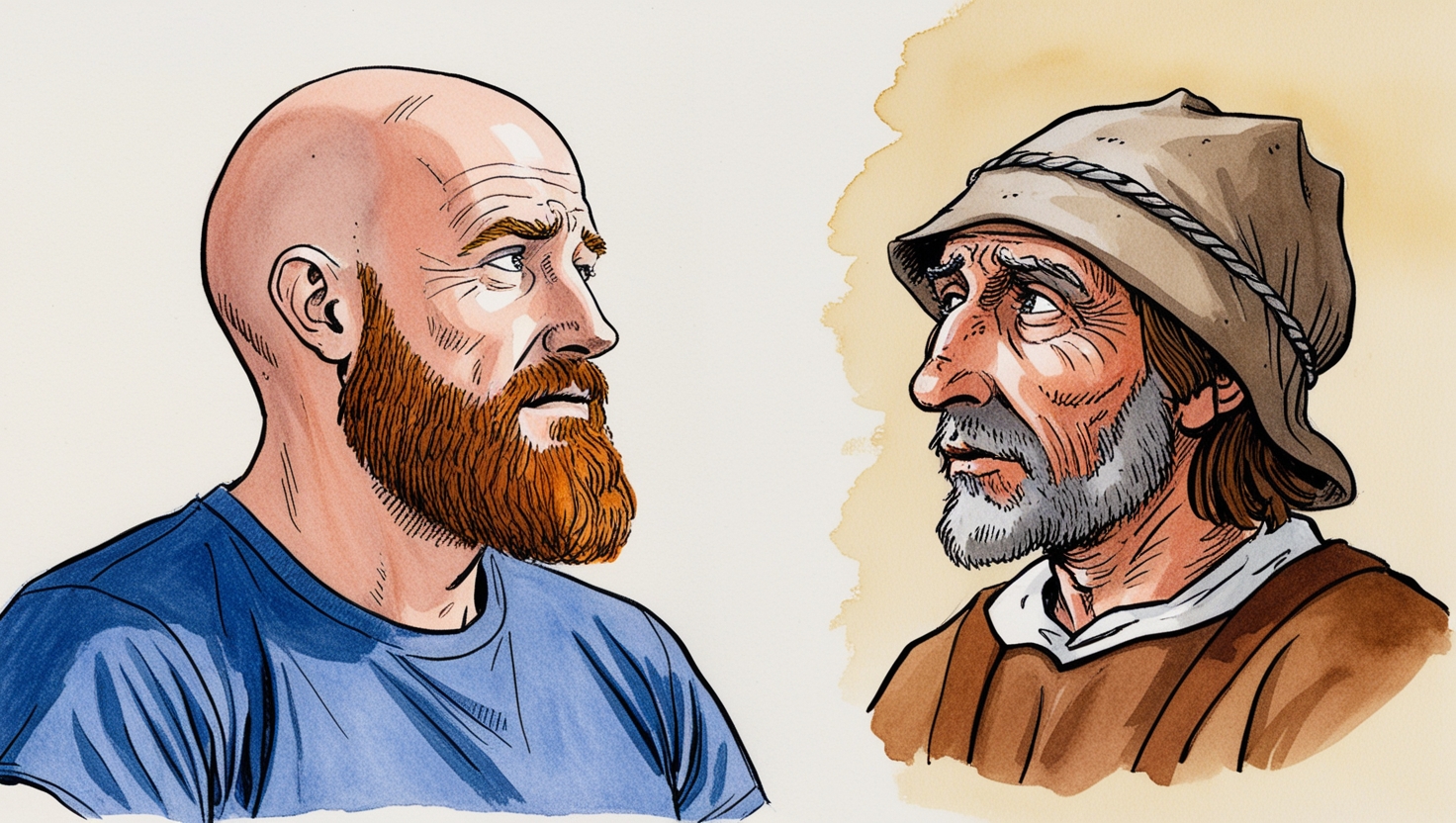
With the recent surprise win by the Trump campaign in the USA, my reaction to that brought home to me a key consideration of the work I’m undertaking reponding to the original three lanes of Leeds in Along the Calls
It’s interesting for me to link my own reactions and feelings to a major change and consider how significant changes would have affected others who lived through them.
I’m still very much researching the Templars out at Newsam – but at the same time thoughts of how someone living in Leeds in the late 11th century would be responding to changes which were affecting them at varying distances – the ripples of which were either affecting them or could be causing them concern.
They were living in a hamlet where there was little reason for messengers to travel to or through; so any news would arrive through the ripple of people who had reason to travel village to village – for example traders and performers.
But, there was still significant news arriving:
- Of Harald and the vikings had been beaten by the English King Harold in the decisive battle at Stamford Bridge (just east of York)
- Harold himself had been beaten by William, Duke of Normandy near Hastings on the South Coast
- The 7 thanes who had owned the Leeds manor didn’t return – and the tithe (tax) income of the locale was given (in perpetuity) to York’s newly-formed Trinity Priory.
- We don’t know how absent the thanes had been – but we’re pretty certain Ralph Paynel was almost entirely absent from Leeds (having other estates across England and Normandy) – would they have had some form of reeve – and was this an inherited role – aside from the priest this person was most likely to have impact on day to day township decisions.
- William brought great change to England changing laws and social contracts very rapidly – making life harsher or at least different for many.
- But even before he affected the way of living he ordered what we refer to the Harrying of the North – death and destruction on a massive scale to enforce law on his new people. Unusually for the area – Leeds avoided any direct action; many other places took over a hundred years to recover from this action.
What might my predecessors have felt about all this – how it impacted their life of subsistence farming? What they did day-to-day wouldn’t change much. But, equally, in a period where things rarely changed, to have such a change befall you must have had some impact.
But equally – death was closer and more commonplace; diseases which are rare today were commonplace, most died in childhood, few reached 50 and they were all farmers – so killing animals would be every day.
The other significant difference would be cultural – society was very religious at the time; with the church ruling many lives – 10% of their crops went to the church, they spent much of every Sunday at church (not all of it praying) and they actually had large communities of monks and nuns who simply existed to pray for the souls of their fellow citizens. So, to some extent, negative actions would often be seen as god sent.
Image credit: generated by Leonardo.AI from author’s prompts.
Why was it unlikely Leeds received messenger-delivered news?
- The manor of Leeds was ceded by the 7 thanes who’d shared it pre-1066 (along with other places)
- There were no significant manors nearby since the vikings role had diminished and Headingley’s Skyrack was a place of importance
- the main east to west road passed through what is the northern suburbs of Leeds today and the nearest main North South road crossed the Aire at Ferrybridge
What’s happening with the Along the Calls project?
After a bit of a pause while I reconsider the project – I’m now committed to developing it in 2025 – running 4 projects over 3 years – the waterways of Leeds, the Norman conquest, the arrival of the trains and gentrification at the end of the 20th century.
All these projects will look to how we can imagine these significant changes impacts those who lived in and used the area at the time. They will include personal projects from me, invites for others to collaborate with me and community projects in the area.

 Jon Eland