
A three-year journey of intentional creative practice
As formal education often dictates the approach of individual creative growth, I’ve chosen a different path. Over the next three years, I am working through a self-initiated master’s programme. This will be a structured, intentional journey to elevate my creative practices. The goal is to nurture individual strands and make sure they flourish with a good balance of time, effort, and critical reflection. This article describes what this self-initiated master’s will entail, how it will be structured, and what I hope to achieve.
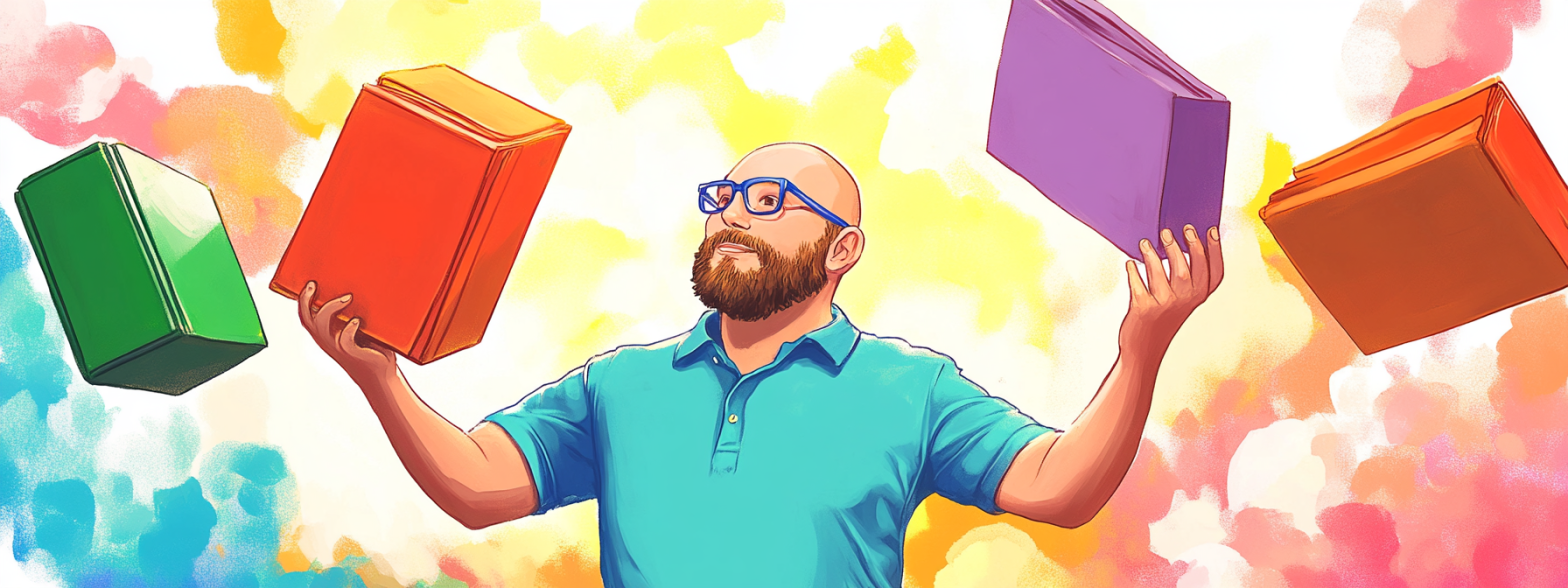
Illustration generated by AI in Midjourney from my prompts.
Why a Self-Initiated Master’s?
The traditional routes to creative education—particularly institutional master’s programs—offer valuable insights, structure, and peer engagement. I felt that these programs wouldn’t offer me the flexibility, value or individual focus I need. Instead, I’ve chosen to design a three-year program that directly addresses the demands of my creative practice. The key purpose is to become more intentional in how I approach my work and balancing effort.
Rather than dividing my focus between short-term projects, I will work with a long-term vision across three major strands. Self-reflection and collaboration with peers will allow in-built flexibility to adjust, as needed.
The structure: a three-year, nine-term approach
The self-initiated master’s will be split into nine terms, spread across three years. This gives the program both the time to develop gradually and the flexibility to accommodate shifts in focus. Here’s a breakdown:
- Term 1: Programme Design and Planning
I’ll identify the key goals for each of the three strands of my practice- portraiture; focusing on LGBTQ+ folk who, like me, are from Generation X),
- place-based projects; looking ay the original three lanes of Leeds, and
- community; creating a mutually supportive space for artists.
- During this phase, I will work on identifying key supporters who can help guide and refine my plans. Roles will include mentor, collaborator, and critic.
- Terms 2-8: Creative Development
I will work on the three elements of my practice concurrently, though not simultaneously. Each term will be defined by goal-driven OKRs (Objectives and Key Results), which will guide my short-term goals and progress. This system will allow me to break down larger ambitions into manageable tasks, with flexibility to adjust as needed. The work will be shared iteratively through blogs, video diaries, and online platforms. This will allow both for public engagement and feedback loops. - Term 9: Reflection
The final term will be a period of “decompression,”. At this time I will bring together the various strands of my work. This will reflect on the journey, share resulting work and produce a comprehensive report of outcomes and insights.
Balancing the three strands of my practice
One of the bigger challenges I face is balancing the different areas of my practice. While portraiture, place-based work, and community-building are interconnected, they each need distinct approaches and time commitments. I aim to apply the right level of effort to each throughout.
- Place-based work: A focus on the Calls and Kirkgate area – the origin of Leeds. This will responding to its cultural and historical context. Site-specific art projects that engage with the community will celebrate the unique character of this location.
- Portraiture: My ongoing work with LGBTQ+ individuals, particularly those from Generation X, will form one of the primary strands. This work involves naturalistic, unposed photography alongside interviews, with a particular emphasis on personal identity and history.
- A new arts community: I will nurture a supportive space for those artists and creatives who feel “othered.” It will offer a platform for collaboration, critique, and support. I’m developing the specifics of how this community will take shape. Term 1 will include planning and testing these ideas.
Public sharing and collaboration
Throughout the three years, I’ll be producing and sharing work iteratively—both mine and that of collaborators. The intention here is to keep the process transparent, inviting feedback and collaboration at various stages. This will create a richer dialogue, between me and my direct audience and the wider creative, local, historic and communities. I aim to engage in the related communities and through accessible online platforms.
Mentorship and peer support
A crucial part of my program will be developing relationships with mentors, coaches, and collaborators. In the first term, I will find individuals who can help guide me. I’m intentionally leaving this open-ended. These relationships should evolve naturally based on their feedback and engagement with my work.
Additionally, the arts community I aim to foster seeks to serve as a critique space. This will offer ongoing feedback on my work and that of others. This collaborative environment will be vital in helping me stay grounded, focused, and critically engaged throughout the process.
What will I achieve?
At the end of this three-year programme, I will have produced a significant body of work. This work will show my evolving creative practice. More importantly, I aim to become a more intentional and considered artist. An appropriate balance between creativity, critical reflection, and collaboration will have been reached.
While the specific outcomes will depend on how the projects evolve, the overarching goal is clear. It is paramount that all key elements of my practice flourish and have the time, attention and consideration they deserve. This self-initiated master’s is my way of giving structure to that commitment.
Final Thoughts
By sharing this journey, I hope to inspire those who are also seeking different ways to structure their creative growth. This is not about sidestepping institutional frameworks, but about creating something personal, flexible, and reflective of my practice and values.
Please don’t hesitate to email me or contact me on Instagram if you want to know more.

 Jon Eland